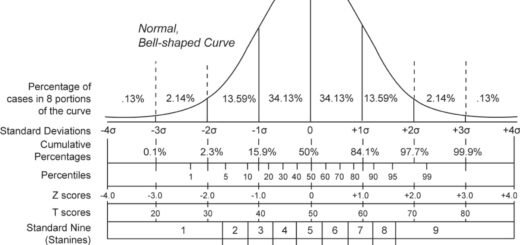
Value at Risk Calculation in R: A Complete Guide for Financial Risk Management
Value at Risk Calculation in R, Risk management is a fundamental component of modern finance. Investors, portfolio managers, banks, hedge funds, insurance companies, and fintech organizations continuously assess potential losses that may arise from market fluctuations. One of the most widely used risk metrics in the financial industry is Value at Risk (VaR).
Value at Risk provides a statistical estimate of the maximum potential loss that an investment or portfolio could experience over a specified period and confidence level. Regulatory frameworks such as Basel III, enterprise risk management programs, and institutional investment strategies frequently rely on VaR for measuring market risk.
R offers powerful packages and analytical capabilities for calculating and visualizing Value at Risk, making it a popular choice among quantitative analysts and risk professionals.
This guide explains the concept of VaR, different calculation methods, practical implementations in R, and best practices for financial risk analysis.
What Is Value at Risk (VaR)?
Value at Risk (VaR) measures the potential loss in value of an asset or portfolio over a specified time horizon under normal market conditions.
A VaR statement typically answers the question:
“What is the maximum expected loss over a given period with a specified confidence level?”
For example:
- Daily VaR = $10,000
- Confidence Level = 95%
Interpretation:
There is a 95% probability that losses will not exceed $10,000 in a single trading day.
Conversely, there is a 5% probability that losses may exceed $10,000.
Why VaR Is Important
Financial institutions use VaR to:
Measure Portfolio Risk
Estimate potential investment losses.
Regulatory Compliance
Meet banking and investment regulations.
Capital Allocation
Determine required capital reserves.
Risk Monitoring
Track portfolio exposure over time.
Investment Decision-Making
Compare risk across investment strategies.
Key Components of VaR
Three factors determine Value at Risk:
Confidence Level
Common confidence levels include:
- 90%
- 95%
- 99%
Higher confidence levels produce larger VaR estimates.
Time Horizon
Examples include:
- Daily VaR
- Weekly VaR
- Monthly VaR
- Annual VaR
Portfolio Value
VaR is usually expressed as either:
- Dollar value
- Percentage loss
Types of VaR Calculation Methods
The most common VaR approaches are:
Historical Simulation VaR
Uses historical returns directly without assuming a probability distribution.
Parametric VaR
Assumes returns follow a normal distribution.
Monte Carlo VaR
Uses simulated market scenarios to estimate potential losses.
Each method has strengths and limitations.
Installing Required Packages
install.packages(c(
  "quantmod",
  "PerformanceAnalytics",
  "xts",
  "zoo"
))
Load the required libraries:
library(quantmod)
library(PerformanceAnalytics)
library(xts)
library(zoo)
Downloading Financial Market Data
We’ll use Apple stock data from Yahoo Finance.
library(quantmod)

getSymbols(
  "AAPL",
  src = "yahoo",
  from = "2022-01-01"
)
Calculate daily returns:
returns <- dailyReturn(
  Ad(AAPL)
)

head(returns)
Exploratory Analysis
Before calculating VaR, examine return behavior.
hist(
  returns,
  breaks = 50,
  main = "Distribution of Daily Returns",
  xlab = "Returns"
)
This helps identify:
- Volatility
- Skewness
- Outliers
- Tail risk
Historical Value at Risk
Historical VaR uses actual historical returns.
Calculate 95% Historical VaR
VaR(
  returns,
  p = 0.95,
  method = "historical"
)
Calculate 99% Historical VaR
VaR(
  returns,
  p = 0.99,
  method = "historical"
)
Historical VaR is simple and does not rely on distributional assumptions.
Parametric Value at Risk
Parametric VaR assumes returns follow a normal distribution.
Calculate 95% Parametric VaR
VaR(
  returns,
  p = 0.95,
  method = "gaussian"
)
Calculate 99% Parametric VaR
VaR(
  returns,
  p = 0.99,
  method = "gaussian"
)
Advantages:
- Fast computation
- Widely used
Limitations:
- Assumes normally distributed returns
- May underestimate extreme losses
Manual VaR Calculation
A simple parametric VaR calculation:
mu <- mean(returns)
sigma <- sd(returns)

var95 <- mu +
  qnorm(0.05) * sigma

var95
Convert to percentage:
abs(var95) * 100
This represents the estimated maximum daily loss percentage at a 95% confidence level.
Portfolio VaR Calculation
Risk managers often analyze portfolios rather than individual assets.
Download multiple stocks:
symbols <- c(
  "AAPL",
  "MSFT",
  "GOOG",
  "AMZN"
)

getSymbols(
  symbols,
  src = "yahoo",
  from = "2022-01-01"
)
Create return matrix:
returns <- na.omit(
  merge(
    dailyReturn(Ad(AAPL)),
    dailyReturn(Ad(MSFT)),
    dailyReturn(Ad(GOOG)),
    dailyReturn(Ad(AMZN))
  )
)

colnames(returns) <- symbols
Build an Equal-Weight Portfolio
weights <- c(
  0.25,
  0.25,
  0.25,
  0.25
)

portfolio_returns <-
  Return.portfolio(
    returns,
    weights = weights
  )
Calculate portfolio VaR:
VaR(
  portfolio_returns,
  p = 0.95,
  method = "historical"
)
Monte Carlo Value at Risk
Monte Carlo simulation generates thousands of possible future outcomes.
Generate simulated returns:
set.seed(123)

simulated_returns <-
  rnorm(
    10000,
    mean = mean(returns),
    sd = sd(returns)
  )
Estimate VaR:
quantile(
  simulated_returns,
  probs = 0.05
)
Advantages:
- Flexible
- Handles complex portfolios
Disadvantages:
- Computationally intensive
Expected Shortfall (Conditional VaR)
Expected Shortfall measures the average loss beyond the VaR threshold.
ES(
  returns,
  p = 0.95
)
Expected Shortfall is often preferred because it captures extreme downside risk more effectively.
Visualizing VaR
Plot return distribution with VaR threshold:
hist(
  returns,
  breaks = 50,
  main = "Return Distribution"
)

abline(
  v = var95,
  lwd = 2
)
Visualizations improve communication of risk metrics to stakeholders.
Backtesting VaR Models
Backtesting evaluates whether VaR estimates accurately predict actual losses.
Example:
actual_losses <-
  returns < var95

sum(actual_losses)
A reliable VaR model should generate violations close to expected levels.
Advantages of VaR
Easy Interpretation
Provides a single risk number.
Industry Standard
Widely used across financial institutions.
Regulatory Acceptance
Accepted by many regulatory frameworks.
Portfolio Comparison
Allows comparison across strategies and asset classes.
Limitations of VaR
Tail Risk Ignored
Does not measure losses beyond the VaR threshold.
Distribution Assumptions
Parametric VaR may underestimate extreme events.
Historical Dependence
Historical VaR assumes the future resembles the past.
Market Shocks
Extreme market events may exceed model expectations.
Real-World Applications
Banks
Measure trading desk exposure.
Hedge Funds
Monitor portfolio risk.
Asset Managers
Evaluate investment strategies.
Insurance Companies
Assess market exposure.
FinTech Platforms
Provide automated risk analytics.
Best Practices
- Combine VaR with Expected Shortfall.
- Use multiple VaR methods.
- Perform regular backtesting.
- Conduct stress testing.
- Monitor risk continuously.
- Evaluate tail-risk scenarios.
- Use diversified portfolios.
- Update models frequently.
Conclusion
Value at Risk (VaR) is one of the most important tools in modern financial risk management. It provides a standardized framework for estimating potential losses and helps organizations monitor market exposure, allocate capital, and comply with regulatory requirements.
Using R, analysts can easily calculate Historical VaR, Parametric VaR, Monte Carlo VaR, and Expected Shortfall while leveraging powerful financial analytics packages. By combining VaR with stress testing, portfolio optimization, and advanced risk metrics, investors can build more resilient investment strategies and improve long-term decision-making.