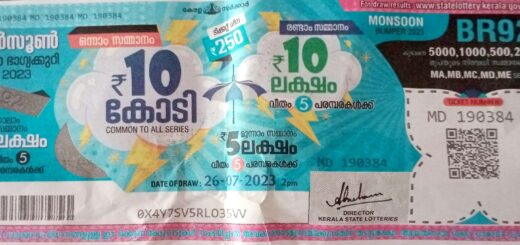
Kerala Lottery Prediction: A Data Science Perspective
Kerala Lottery Prediction: A Data Science Perspective, The Kerala State Lottery is one of the most searched topics in India, with millions of daily queries like “Kerala Lottery Result Today” and “Kerala Lottery Prediction.”
While the lottery is designed to be random, data science provides powerful tools to analyze historical results, detect statistical anomalies, and simulate probabilities.
This article explores how predictive modeling can be applied to Kerala Lottery data, not to guarantee wins, but to understand randomness and improve analytical curiosity.
1. Data Collection & Preprocessing
Lottery results are published daily in PDF format. Using web scraping in R, we can automate data extraction:
library(rvest)
library(dplyr)

url <- "https://www.keralalotteries.com/results"
page <- read_html(url)

results <- page %>%
  html_nodes(".lottery-result") %>%
  html_text()

# Clean and structure data
lottery_data <- data.frame(
  draw_date = Sys.Date(),
  numbers = strsplit(results, " ")[[1]]
)
This creates a structured dataset of winning numbers over time.
2. Exploratory Data Analysis
Using frequency distribution, we can identify which digits or combinations appear most often:
table_numbers <- table(unlist(lottery_data$numbers))
barplot(table_numbers, col="steelblue", main="Frequency of Winning Numbers")
This visualization highlights whether certain numbers cluster more frequently.
3. Predictive Modeling
Although outcomes are random, simulations can estimate probabilities:
- Monte Carlo Simulation: Generate thousands of random draws to compare with historical distributions.
- Markov Chains: Model transitions between digits (e.g., if 7 follows 3 more often than expected).
- Bayesian Updating: Adjust probability estimates as new draws are added.
set.seed(123)
sim_draws <- replicate(10000, sample(1:100, 6, replace=FALSE))
sim_freq <- table(unlist(sim_draws))
plot(sim_freq, type="h", main="Monte Carlo Simulation of Kerala Lottery")
4. Insights & Ethical Use
- Pattern Recognition: Data science reveals clustering and anomalies, but does not predict exact outcomes.
- Responsible Play: These models are for research and curiosity, not gambling strategies.
- Public Fascination: Kerala Lottery revenue supports welfare schemes, making it a unique blend of entertainment and social contribution.
Kerala Lottery Prediction Dashboard (R Shiny Concept)
The dashboard allows users to:
- Explore historical Kerala Lottery results.
- Visualize frequency distributions of winning numbers.
- Run Monte Carlo simulations to see probability spreads.
- Compare draw types (Karunya, Suvarna Keralam, Sthree Sakthi, etc.).
R Shiny Code Skeleton
library(shiny)
library(ggplot2)
library(dplyr)

# Load historical Kerala Lottery dataset
lottery_data <- read.csv("kerala_lottery_results.csv")

ui <- fluidPage(
  titlePanel("Kerala Lottery Prediction Dashboard"),

  sidebarLayout(
    sidebarPanel(
      selectInput("draw_type", "Select Draw Type:",
                  choices = unique(lottery_data$draw_type)),
      numericInput("sim_runs", "Monte Carlo Simulations:", 1000, min = 100, max = 10000),
      actionButton("run_sim", "Run Simulation")
    ),

    mainPanel(
      tabsetPanel(
        tabPanel("Frequency Analysis", plotOutput("freqPlot")),
        tabPanel("Monte Carlo Simulation", plotOutput("simPlot")),
        tabPanel("Summary", tableOutput("summaryTable"))
      )
    )
  )
)

server <- function(input, output) {

  # Frequency Plot
  output$freqPlot <- renderPlot({
    filtered <- lottery_data %>% filter(draw_type == input$draw_type)
    freq <- table(unlist(strsplit(as.character(filtered$winning_numbers), " ")))
    barplot(freq, col="darkgreen", main=paste("Frequency -", input$draw_type))
  })

  # Monte Carlo Simulation
  observeEvent(input$run_sim, {
    sim_draws <- replicate(input$sim_runs, sample(1:100, 6, replace=FALSE))
    sim_freq <- table(unlist(sim_draws))

    output$simPlot <- renderPlot({
      plot(sim_freq, type="h", col="blue", main="Monte Carlo Simulation Results")
    })

    output$summaryTable <- renderTable({
      head(sort(sim_freq, decreasing=TRUE), 10)
    })
  })
}

shinyApp(ui = ui, server = server)
5. Conclusion
Kerala Lottery prediction through data science is less about winning and more about understanding randomness. By applying R, statistical modeling, and visualization, analysts can uncover fascinating insights into probability distributions.